
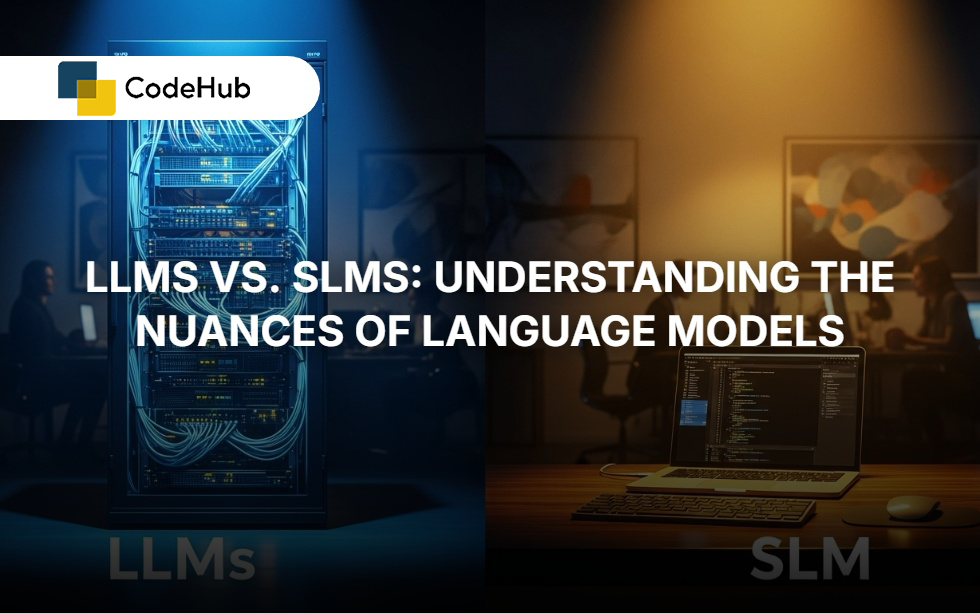
The landscape of Artificial Intelligence is evolving at lightning speed, with “Language Models” often discussed. But are all language models created equal? Not quite. Differentiating between Large Language Models (LLMs) and Small Language Models (SLMs) is crucial for understanding their capabilities and applications.
What Are Large Language Models (LLMs)?
LLMs are the titans of the AI world. Trained on colossal datasets encompassing vast portions of the internet, they boast billions (or even trillions) of parameters. Models like GPT-4 and Llama 2 exemplify LLMs, capable of understanding, generating, and translating human-like text across a broad spectrum of general-purpose tasks, from creative writing to complex problem-solving. Their sheer scale grants them remarkable emergent abilities.
Introducing Small Language Models (SLMs)
In contrast, SLMs are characterized by their significantly smaller size, typically ranging from a few million to a few billion parameters. They are often trained on more specialized datasets or are fine-tuned versions of larger models. SLMs are designed for specific tasks or domains, offering efficiency, lower computational requirements, and faster inference times. Examples include specialized chatbots or models for particular industry jargon.
Key Distinctions and Applications
The primary difference lies in scale, capability, and resource intensity. LLMs excel at versatility and complex, open-ended tasks but demand substantial computational power and cost. SLMs, while less versatile, shine in focused applications where efficiency, precision, and reduced operational overhead are paramount. They are ideal for edge devices, budget-conscious projects, or highly specific enterprise solutions.
The Right Tool for the Job
Ultimately, neither LLM nor SLM is inherently “better.” The optimal choice depends entirely on the specific use case, available resources, and desired performance characteristics. Understanding these distinctions empowers developers and businesses to select the right linguistic tool for their AI endeavors.