
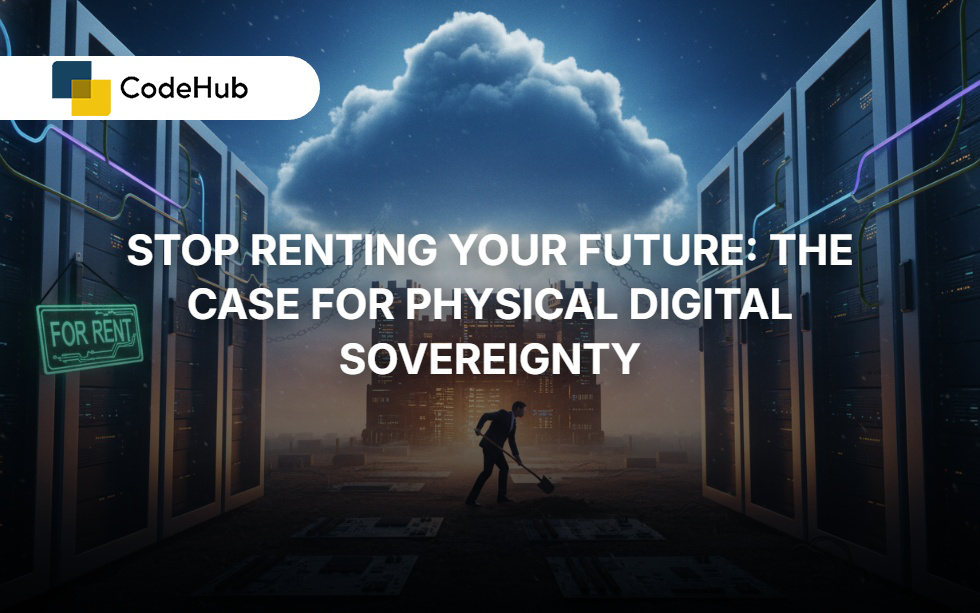
Modern enterprises often mistake the cloud for a permanent home, but in reality, it is a high-rent district where you never build equity. As “digital tenants,” we have traded autonomy for convenience, leaving our most valuable assets—data and infrastructure—at the mercy of third-party landlords.
The Landlord-Tenant Trap
Cloud providers operate on a rent-seeking model. They control the pricing, the terms of service, and the physical access to your environment. When you rely entirely on a hyperscaler, you are subject to sudden cost spikes and arbitrary vendor lock-in. True digital sovereignty is impossible when your “property” can be modified or throttled by a provider’s policy change.
Reclaiming the Bare Metal
Investing in physical hardware is the only way to regain absolute control. Owning your servers allows for customized security architectures, predictable long-term costs, and the elimination of “noisy neighbor” performance issues. By repatriating critical workloads to your own silicon, you ensure that your data remains under your jurisdiction, not a corporate landlord’s.
Conclusion
Digital sovereignty requires ownership. While the cloud offers temporary utility, the foundation of a truly independent digital strategy must be built on hardware you control. It is time to stop renting and start building your own digital estate.