
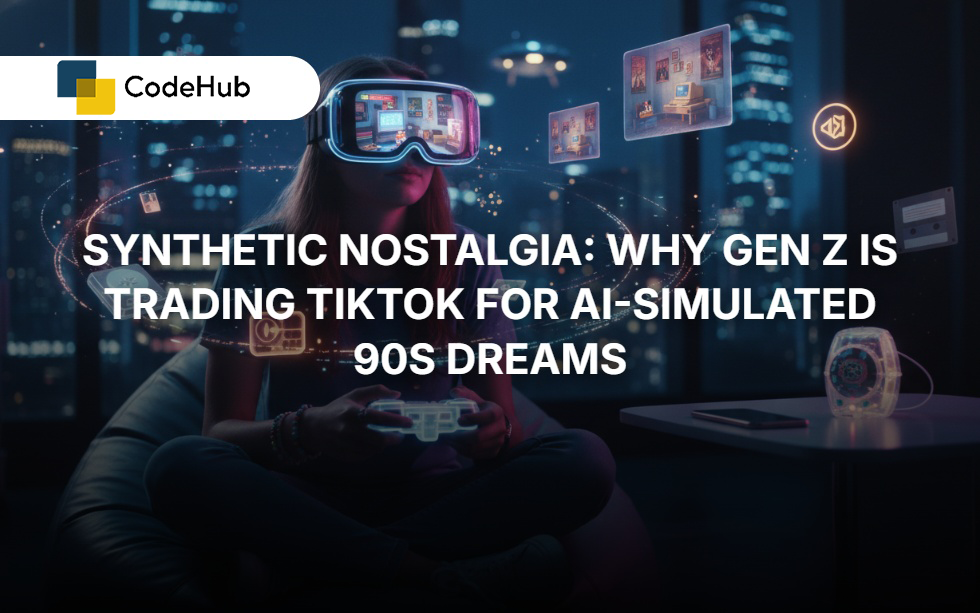
Gen Z is increasingly turning away from the frantic pace of TikTok to embrace “synthetic nostalgia.” This phenomenon leverages generative AI to reconstruct a high-fidelity, idealized version of the 1990s—a decade most of this demographic never actually experienced.
The Shift from Scroll to Simulation
While social media offers curated snippets of history, AI provides an immersive, personalized escape. Gen Z is utilizing advanced neural networks to recreate the “analog warmth” that modern, hyper-polished digital platforms lack.
Why the 90s?
The attraction lies in the perceived balance between emerging technology and human presence:
- Tactile Aesthetics: A preference for the intentional imperfections of VHS grain and low-poly graphics.
- Algorithmic Fatigue: A desire to escape the “Infinite Scroll” in favor of a finite, slower cultural era.
- Curated Authenticity: Using AI to “hallucinate” a simpler, pre-smartphone world where connection felt more tangible.
Conclusion
Synthetic nostalgia represents a significant psychological pivot. By leveraging AI to simulate the past, Gen Z is crafting a digital sanctuary that prioritizes mood and atmosphere over engagement metrics. This trend suggests that the future of technology may not lie in looking forward, but in a sophisticated, AI-enhanced reimagining of yesterday.